Loading...
載入中,請稍等

Menstruation is a biological phenomenon experienced by 50% of the population,

yet it profoundly impacts every single person in the world. Whether or not you personally experience it, someone you know certainly has.

Menstruation

Menstruation is a biological phenomenon unique to humans, primates and a small number of bats and elephant shrew species. It first occurs during puberty and it continues until menopause, accompanying most biological females for nearly 40 years of their lives.

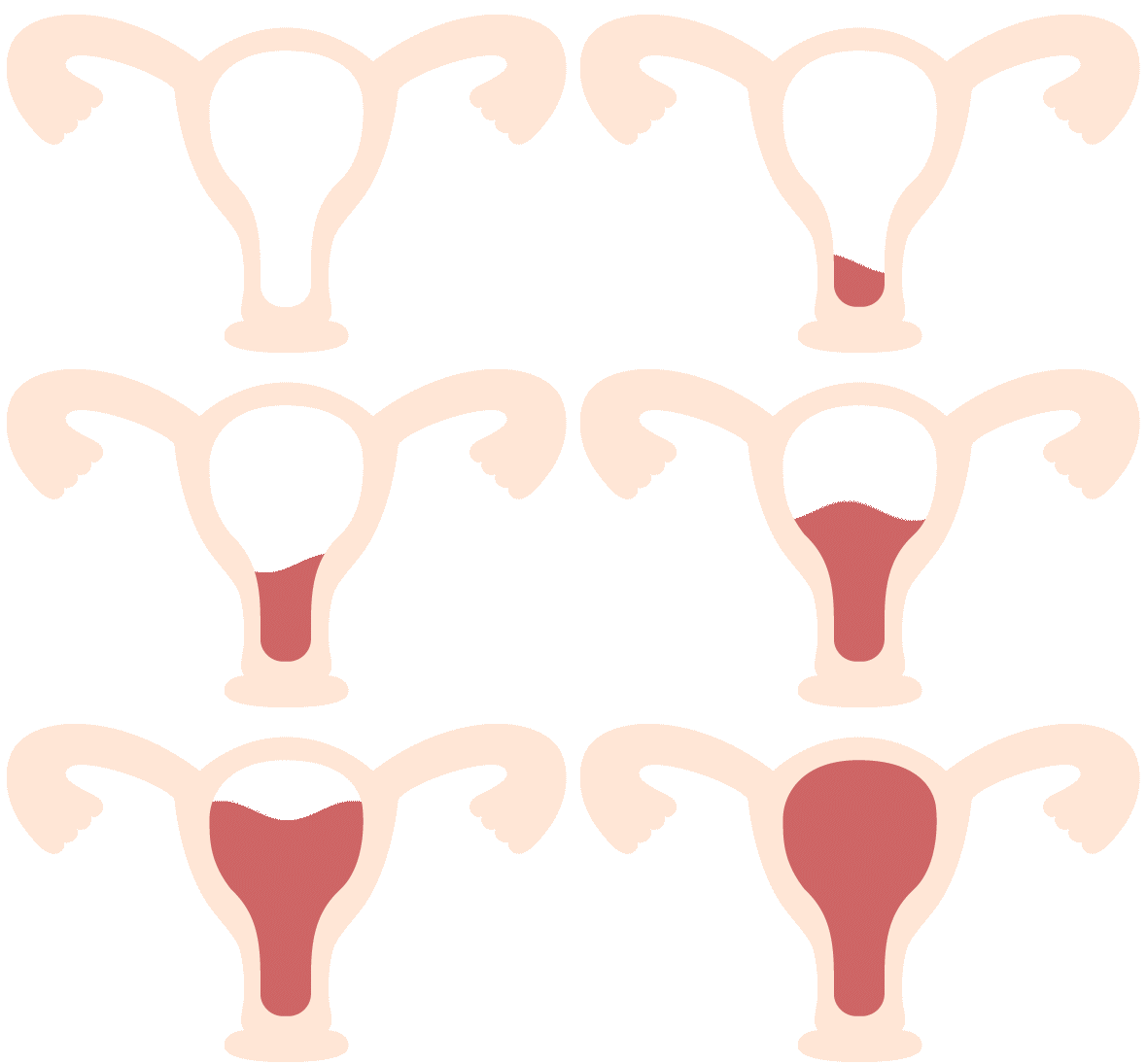
Explore the phases of the menstrual cycle below

Follicular

Follicles mature, uterine lining thickens

Ovulation

Egg(s) is/are released

Luteal

The follicle is absorbed and forms into the corpus luteum

Menstrual

The Uterine lining sheds and menstrual blood appears
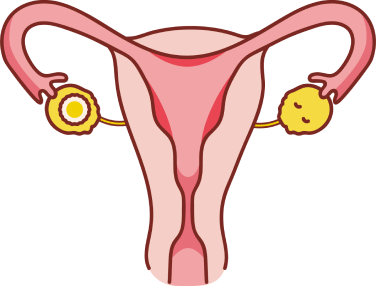
Cycle length is measured from the first day of menstrual phase up to the day before the next period starts, typically ranging from 28 to 35 days—though for some people, the cycle occurs once every three months. Each menstrual flow usually lasts 5 to 7 days.

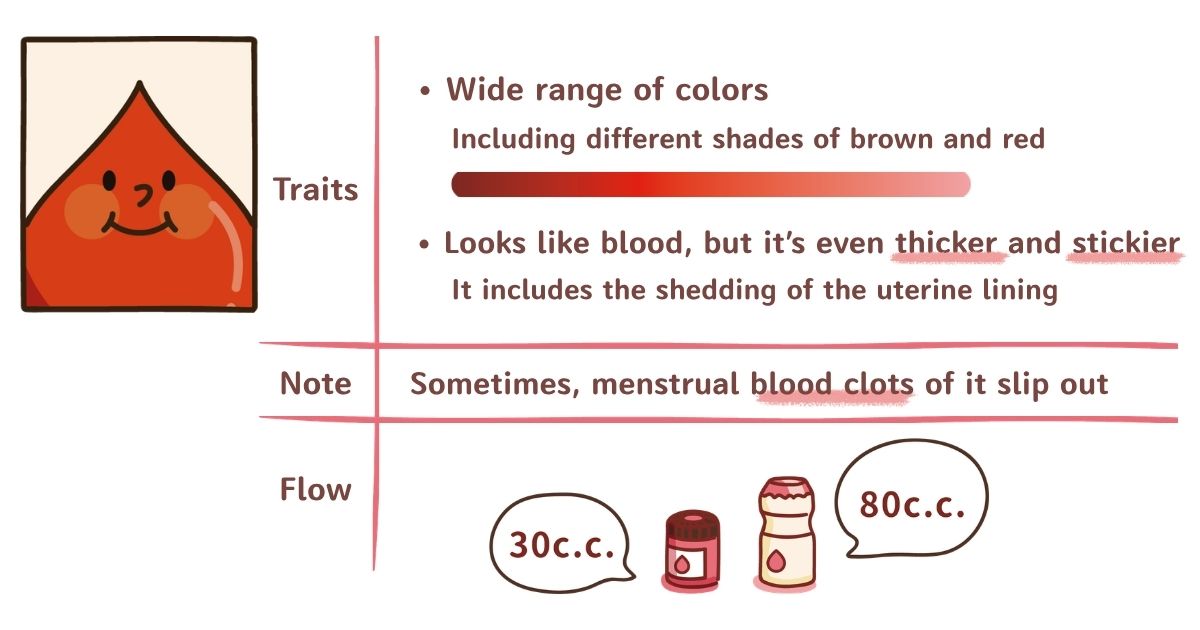
During a period, the body releases about 30 to 80 milliliters of menstrual blood, roughly the volume of a small jar of poster paint or a bottle of Yakult.

The texture of menstrual blood is essentially the same as regular blood, though it can occasionally be a bit thicker. This is because it contains not only blood but also shed uterine lining. Vagical secretions and so on. Sometimes, blood clots may appear due to platelets coagulating the blood, which is a completely normal phenomenon. Menstrual blood comes in a wide range of colors, from light pink and bright red to dark brown. When the blood appears darker, it is simply because it has oxidized.

Period Poverty

Period Poverty refers to the social phenomenon by which people are physically or mentally affected because they cannot afford to buy or access sufficient period products with dignity due to financial constraints. This can have negative effects such as vaginal infections, pelvic inflammatory disease, depression, and anxiety.

Period poverty is a problem which exists cross-culturally and globally. However, for a long time, it has remained undiscovered or neglected. It is not only a tough issue for developing countries to cope with, but also an urgent problem that the whole world should face squarely.

全球約有高達 5 億人口正在經歷嚴重的月經貧窮

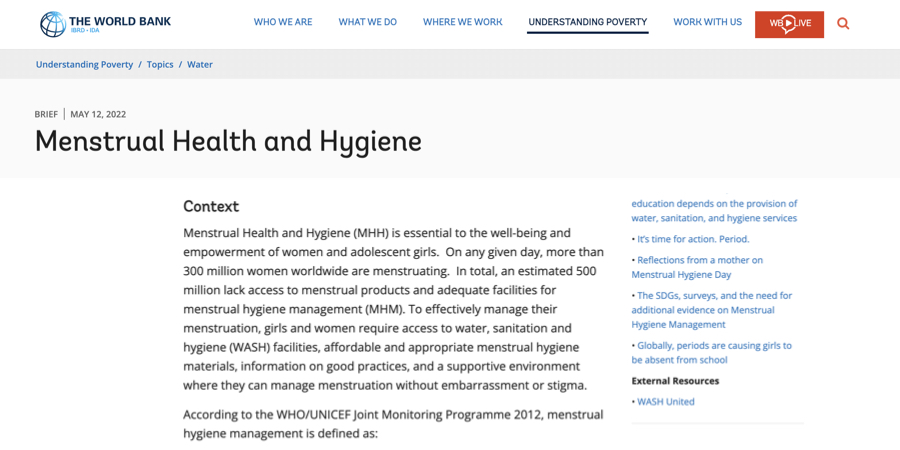
根According to the statistics from the World Bank in 2021, almost half a billion people are experiencing severe period poverty. In more severe cases, tens of thousands of girls, women and menstruators can’t receive proper education because they aren’t able to afford period products during menstruation and are forced to leave schools. This aggravates gender inequality, which causes underprivileged groups to fall into a vicious cycle.

世界地圖

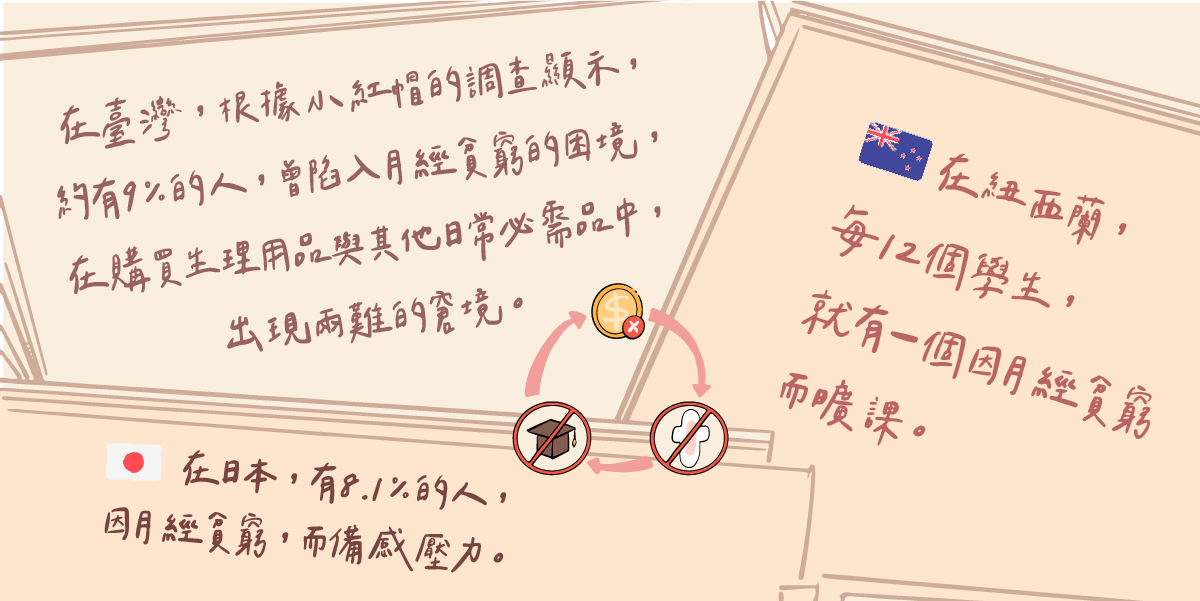
In New Zealand, one in every 12 students skips school because of the problem; in Japan, 8.1% of people feel stressed because of period poverty; in Taiwan, according to the research done by WITH RED, about 9% of people face the dilemma of having to choose between purchasing period products and other daily necessities.

Period Stigma

“Period Stigma” refers to the humiliation and discrimination that derives from the taboos regarding menstruation and from people avoiding menstrual blood and those who menstruate. The period is considered unclean and something to be ashamed of. It is also a topic that can’t be discussed in public. Any attempt to exclude a girl, woman or menstruator who is having their period from participating in religious ceremonies, cultural customs or daily activities is part of this stigmatisation as well.

月經污名煩惱插圖

The Menstrual Huts

In some parts of Nepal, some people believe that the period is unclean, impure, and is supposed to bring bad luck. Therefore, a menstrual taboo derives from this belief, called “छाउपडी (Chhaupadi)”, which means “menstrual hut”.

Under this kind of menstrual taboo, a Nepalese person who is experiencing her period will be required to live in the menstrual hut. She must not set foot in her house, nor can she join any family or community events. She can’t even have physical contact with anyone, especially men and kids, for this act may pass on bad luck to others. The menstrual huts not only restrict people’s actions and physical autonomy but also keep a great number of teenage girls from receiving education. The girls are forced to skip classes or drop out of school after puberty.

Although the Supreme Court of Nepal announced in 2005 that this tradition was against the law, and despite the Nepal Federal Parliament passing the legislation to abolish it in 2017, many families are still practising this. This menstrual taboo in Nepal isn’t the only one. Similar ones can be found in India currently and in Japan in the past.

閱讀全文

5000 Names for the Period

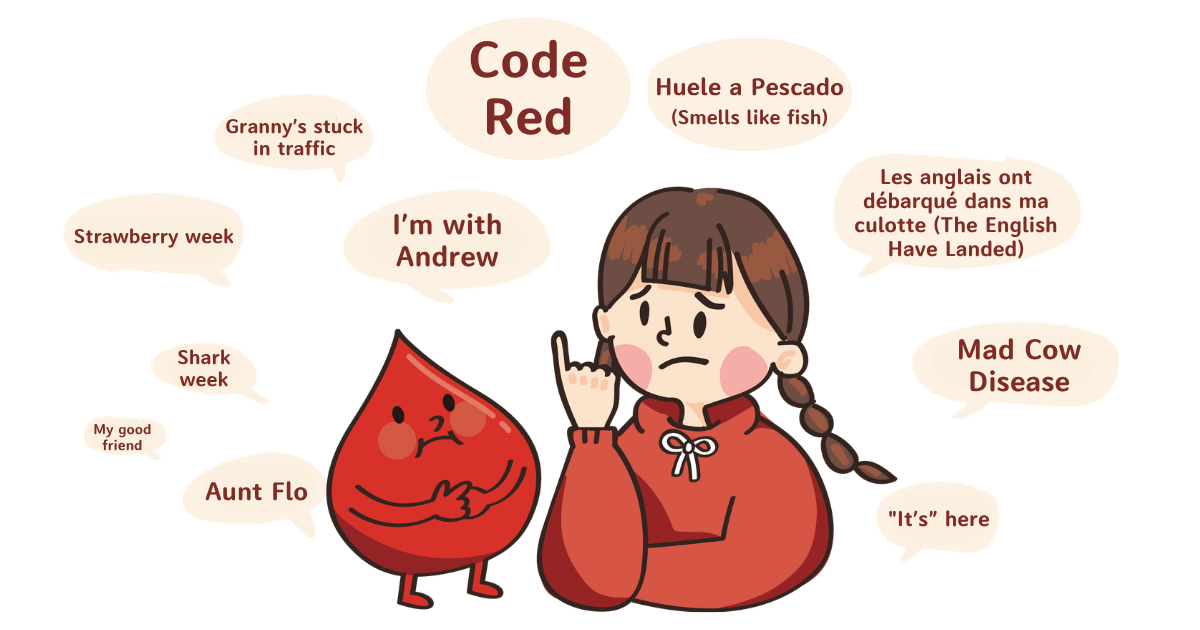
According to the statistics from the menstrual tracking app “Clue” and the International Women’s Health Coalition (IWHC) in 190 countries around the globe, there are at least five thousand euphemisms people use for menstruation and related phenomena and items. In Taiwan, there are over thirty euphemisms, according to our research. The most common ones are “that stuff,” “my good friend,” and “my aunt”.

In other countries and cultures, the occurrence of the period gets all kinds of slang words deriving from historical events, and the colours and characteristics of menstrual blood. In Japan people say “arrival of the black ships”; in France “the English have landed”; in Germany “strawberry week”; in South Africa “granny’s stuck in traffic”; and in Australia, “shark week”, to name but a few.

閱讀全文

The Mythical “Blue Blood”

In most period product commercials and media news, red menstrual blood is replaced with blue liquid.

In 2019, the Australian period care product brand “Libra” used more realistic red liquid to depict menstrual blood and demonstrate the absorbency of its pads in its commercial. The company claimed: We bleed every month, and the blood we discharge is red, not blue. This is natural, normal, and healthy.

This provoked more than 600 people to complain to the Advertising Standards Board, stating that the advert was gross and inappropriate for children. This was the commercial which received the most complaints in Australia that year. The panel noted that the depiction was merely an accurate presentation of a real physical occurrence, and should not lead to penalties. Plenty of discussions regarding period stigma have followed. In addition, more and more companies worldwide have in turn started using red liquid to present menstrual blood in period product commercials.

閱讀全文

Secrets Hidden in Paper Bags

Many people conceal their period products or take them out of their bags quickly and tuck them away into their sleeves or pockets. People are afraid of being seen doing this by others.

Nowadays, in Taiwan, you need to pay extra to get a carrier bag when you shop. However, salespeople still offer non-transparent, free paper bags when you shop for pads, tampons, or other menstrual products at drugstores or convenience stores. This service, particularly in Taiwan, is actually due to the menstrual taboo, having to conceal the act of purchasing period products.

Period products are just like toilet paper. They are an everyday necessity and serve the purpose of absorbing blood, like bandages or band-aids do (and you don’t wrap them in paper bags). The only difference is that the parts which bleed are not the same.

閱讀全文
Period Inequity

Period Inequity generally refers to the inequalities that arise in various aspects of life because people are affected by menstruation– a psychological phenomenon unique to a specific biological sex. This can even worsen the situation for individuals who are already in marginalized or vulnerable positions.

The discussions and scope of period inequity are very broad. Common topics include the “period tax” (Value-added tax on menstrual products), the provision of menstrual products in public spaces, and menstrual leave. In many countries, menstrual products are still classified as “non-essential items”—unlike daily necessities such as toilet paper— and are subject to different tax rates, collectively referred to as “period tax.”

What period inequity truly represents is not just a social issue or a poverty issue, but a glaring manifestation of systemic gender inequality and the neglect of basic rights. Society's overall lack of menstrual education and knowledge, combined with a disregard for these rights, only deepens the phenomenon of period inequity.

While there is still a long way to go on the journey toward menstrual justice, our passion to accomplish more remains strong. We warmheartedly invite you to stand with With Red and to believe in our vision and support our mission.

alt text

While there is still a long way to go on the journey toward menstrual justice, our passion to accomplish more remains strong. We warmheartedly invite you to stand with With Red and to believe in our vision and support our mission.

Donate
Donate
Get In Touch Get In Touch Get In Touch Get In Touch Get In Touch
contact
contact